
If you’re self-employed, run a small business, or earn income as an independent contractor, you’ve probably received a 1099 tax form. While filing taxes with a 1099 may seem overwhelming at first, understanding the process can help you avoid costly mistakes, penalties, and unnecessary stress.
In this guide, we’ll explain how to file 1099 taxes step by step, discuss the different types of 1099 forms, highlight common deductions, and share practical tips to make tax season easier.
What Is a 1099 Tax Form?
A 1099 form is an IRS information return used to report income earned outside of traditional employment. Unlike employees who receive a W-2, freelancers, consultants, gig workers, and many small business owners receive one or more 1099 forms from clients or payment processors.
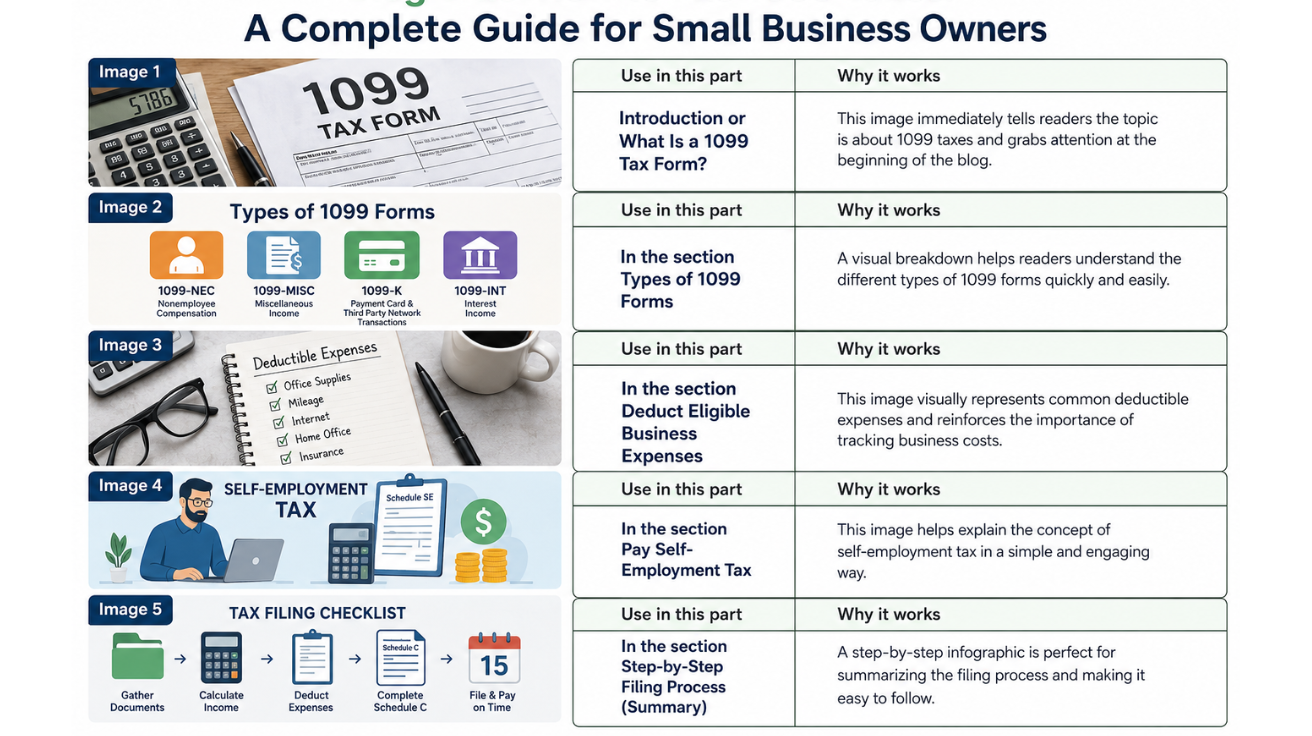
The most common types include:
- Form 1099-NEC – Reports nonemployee compensation of $600 or more.
- Form 1099-MISC – Used for miscellaneous income such as rent or royalties.
- Form 1099-K – Reports payments processed through third-party payment platforms when IRS reporting requirements apply.
- Form 1099-INT – Reports interest income from banks or financial institutions.
Receiving a 1099 doesn’t automatically mean you owe taxes, but it does mean the IRS has a record of the income you earned.
Who Needs to File 1099 Taxes?
You generally need to report 1099 income if you are:
- A freelancer or independent contractor
- A consultant
- A sole proprietor
- A gig economy worker
- A small business owner
- A landlord receiving rental income
- An investor earning interest or dividends
Even if you don’t receive a 1099, you’re still responsible for reporting all taxable income.
Step 1: Gather Your Tax Documents
Before filing your return, collect all necessary paperwork, including:
- All 1099 forms
- Business income records
- Expense receipts
- Bank statements
- Mileage logs
- Home office expenses
- Health insurance records
- Previous year’s tax return
Having organized financial records will make the filing process much smoother.
Step 2: Calculate Your Total Business Income
Add together all income from:
- Every 1099 form
- Direct payments from customers
- Cash payments
- Checks
- Online sales
- Other business revenue
Remember that total business income includes more than just the amounts reported on your 1099 forms.
Step 3: Deduct Eligible Business Expenses
One of the biggest advantages of self-employment is the ability to deduct legitimate business expenses.
Common deductions include:
- Office supplies
- Business software
- Internet and phone expenses
- Marketing and advertising
- Professional memberships
- Business insurance
- Travel expenses
- Vehicle mileage
- Home office expenses
- Education and training
Only deduct expenses that are ordinary and necessary for your business.
Step 4: Complete Schedule C
Most freelancers and sole proprietors report income using Schedule C (Profit or Loss from Business).
Schedule C includes:
- Gross income
- Business expenses
- Net profit or loss
Your net profit is then transferred to your individual income tax return.
Step 5: Pay Self-Employment Tax
Unlike employees, self-employed individuals pay both the employer and employee portions of Social Security and Medicare taxes.
This is known as self-employment tax.
You calculate this using Schedule SE, which is filed with your federal tax return.
Step 6: File Your Federal Tax Return
After completing Schedule C and Schedule SE, file your tax return using Form 1040.
You can file:
- Electronically using approved tax software
- Through a qualified tax professional
- By mail (less common)
Electronic filing is generally faster and helps reduce errors.
Common Mistakes to Avoid
Many taxpayers make simple mistakes that can delay refunds or trigger IRS notices.
Avoid these common errors:
- Forgetting to report all income
- Missing deductible expenses
- Using incorrect Social Security numbers
- Filing after the deadline
- Forgetting estimated quarterly taxes
- Losing receipts and documentation
Keeping accurate records throughout the year helps minimize these issues.
Estimated Taxes Matter
If you’re self-employed, taxes usually aren’t withheld from your income.
Instead, you may need to make quarterly estimated tax payments throughout the year.
Paying estimated taxes can help you:
- Avoid penalties
- Reduce year-end tax bills
- Improve cash flow planning
Keep Good Financial Records
Strong bookkeeping makes tax filing much easier.
Maintain records of:
- Income
- Expenses
- Receipts
- Mileage
- Bank statements
- Invoices
- Payroll records (if applicable)
Good recordkeeping also protects you in case of an IRS audit.
Should You Hire a Tax Professional?
Many freelancers successfully file their own taxes.
However, professional tax assistance may be worthwhile if you:
- Have multiple businesses
- Earn income from several states
- Own rental property
- Have employees
- Need advanced tax planning
- Want to maximize deductions
Professional guidance can often save both time and money.
Final Thoughts
Learning how to file 1099 taxes doesn’t have to be intimidating. By organizing your records, understanding deductible expenses, reporting all income accurately, and filing on time, you can stay compliant with IRS requirements while reducing your tax burden.
For growing businesses, effective bookkeeping and tax planning are just as important as filing the return itself. Maintaining accurate financial records throughout the year makes tax season significantly less stressful and helps you make better business decisions.
Whether you’re a freelancer, consultant, or small business owner, taking a proactive approach to tax preparation will save time, reduce errors, and give you greater confidence every tax season.
Frequently Asked Questions
1. Do I have to file taxes if I receive a 1099?
Yes. If you receive a Form 1099, you must report the income on your federal tax return. Even if you don’t receive a 1099, you’re still responsible for reporting all taxable income.
2. Can I file 1099 taxes myself?
Yes. Many freelancers and small business owners use IRS-approved tax software to file their own returns. However, hiring a tax professional can help maximize deductions and reduce errors.
3. What expenses can I deduct from 1099 income?
Common deductions include home office expenses, internet, business mileage, office supplies, software subscriptions, advertising, insurance, and professional education.
4. What happens if I don’t report 1099 income?
Since the IRS receives copies of most 1099 forms, failing to report the income can result in penalties, interest, and additional tax assessments.
5. When are 1099 taxes due?
Individual federal income tax returns are generally due in April unless the IRS announces a different filing deadline for a specific tax year.