Messy books lead to missed deductions, tax-season panic, and decisions based on guesswork. The right bookkeeping solutions in USA keep your finances accurate, compliant, and ready for growth, whether you run a freelance practice, an online store, or a growing team.
This guide explains what bookkeeping solutions include, the main options available, what to look for in a provider, and how to choose the one that fits your business. By the end, you’ll know exactly what to ask before you hire anyone.
What Are Bookkeeping Solutions?
Bookkeeping solutions are the tools and services that record, organize, and reconcile your business’s financial transactions. They can be cloud software you manage yourself, an outsourced virtual bookkeeper, or a full-service accounting and bookkeeping firm.
Most solutions cover these core tasks:
- Recording income and expenses accurately
- Bank reconciliation and credit card matching
- Managing accounts payable and receivable
- Preparing a profit and loss statement, balance sheet, and cash flow report
- Keeping tax-ready records for the IRS and state agencies
Bookkeeping vs. Accounting: What’s the Difference?
Many owners use the two terms interchangeably, but they are different jobs. Bookkeeping is the day-to-day recording of transactions. Accounting takes that data and interprets it through financial analysis, tax planning, and strategy.
Think of bookkeeping as the foundation. If the foundation is shaky, every tax return, loan application, and budget built on top of it will be too. That is why many businesses invest in strong monthly bookkeeping first, then add accounting and advisory services as they grow.
Why US Businesses Need Professional Bookkeeping
The American tax and compliance system makes accurate records more than a nice-to-have.
- IRS recordkeeping rules: You must keep records that support the income, deductions, and credits on your return. Poor records make audits stressful and expensive.
- Quarterly estimated taxes: Self-employed owners and many small businesses must pay estimated taxes four times a year. Accurate books help you avoid underpayment penalties.
- Sales tax complexity: Rules differ by state, and online sellers may owe tax in several states. Clean records make filing far easier.
- Payroll compliance: Federal and state withholding, plus W-2 and 1099 reporting, depend on well-organized data.
- Funding and valuation: Banks, investors, and buyers expect accurate financial statements before they commit.
In short, good bookkeeping protects you from penalties and gives you the clarity to grow with confidence.
Types of Bookkeeping Solutions Available
There is no single best option. The right choice depends on your size, budget, and how much time you want to spend on finances.
1. DIY Bookkeeping Software
Cloud tools like QuickBooks Online, Xero, and FreshBooks automate bank feeds, invoicing, and expense tracking. They suit businesses with low transaction volume and an owner willing to learn the system. The risk is human error, especially with categorization and reconciliation.
2. Outsourced Bookkeeping Services
With outsourced bookkeeping, a remote team handles your books on a monthly schedule. You get professional accuracy without the cost of a full-time employee. This is one of the most popular bookkeeping services for small businesses because it scales easily as you grow.
3. In-House Bookkeeper
A full-time or part-time employee works inside your company. This fits larger businesses with high transaction volume and daily financial needs. It also carries the highest cost, since you pay salary, taxes, benefits, and software.
4. Full-Service Accounting and Bookkeeping
Here, one firm handles bookkeeping, payroll, tax preparation, and advisory work. It is ideal if you want a single team accountable for your entire financial picture, and it often makes tax season much smoother.
Key Features to Look For in a Bookkeeping Provider
Not all providers are equal. Use this checklist when comparing online bookkeeping services USA businesses rely on.
- Accuracy and regular reconciliation: Books should be closed and reviewed on a consistent monthly schedule.
- Software expertise: Confirm they work in QuickBooks, Xero, or Zoho, or can migrate you from your current system.
- US tax knowledge: Your provider should understand federal requirements and the rules in your state.
- Clear reporting: You should receive readable financial statements, not a pile of spreadsheets.
- Data security: Look for encrypted portals, multi-factor authentication, and restricted access to your information.
- Responsive communication: A dedicated contact who answers questions quickly matters more than most people expect.
- Industry experience: E-commerce, construction, healthcare, and real estate each have unique accounting needs.
- Cleanup capability: If your past books are behind, the provider should be able to catch you up.
What Affects the Cost of Bookkeeping Services?
Pricing varies widely, so be wary of any provider who quotes a number without reviewing your situation. These factors usually drive the price:
- Transaction volume: More transactions mean more work.
- Number of accounts: Additional bank accounts, credit cards, and payment platforms add complexity.
- Add-on services: Payroll, sales tax filing, and accounts payable management are often priced separately.
- Cleanup needs: Catching up on months of unreconciled books typically costs extra.
- Industry complexity: Inventory tracking or job costing requires more expertise.
Always ask for a written quote that lists exactly what is included. Hidden fees are one of the most common complaints in the industry.
How to Choose the Right Bookkeeping Provider
Follow these steps to make a confident decision:
- List your needs. Note your transaction volume, payroll, sales tax obligations, and inventory requirements.
- Set a budget. Decide what you can spend monthly and whether you need one-time cleanup.
- Request a consultation. A good provider asks detailed questions about your business before quoting.
- Check reviews and references. Look for feedback from companies similar to yours.
- Confirm turnaround times. Ask when you will receive monthly reports.
- Review the contract. Check cancellation terms, data ownership, and what happens if you leave.
Benefits of Outsourced Bookkeeping
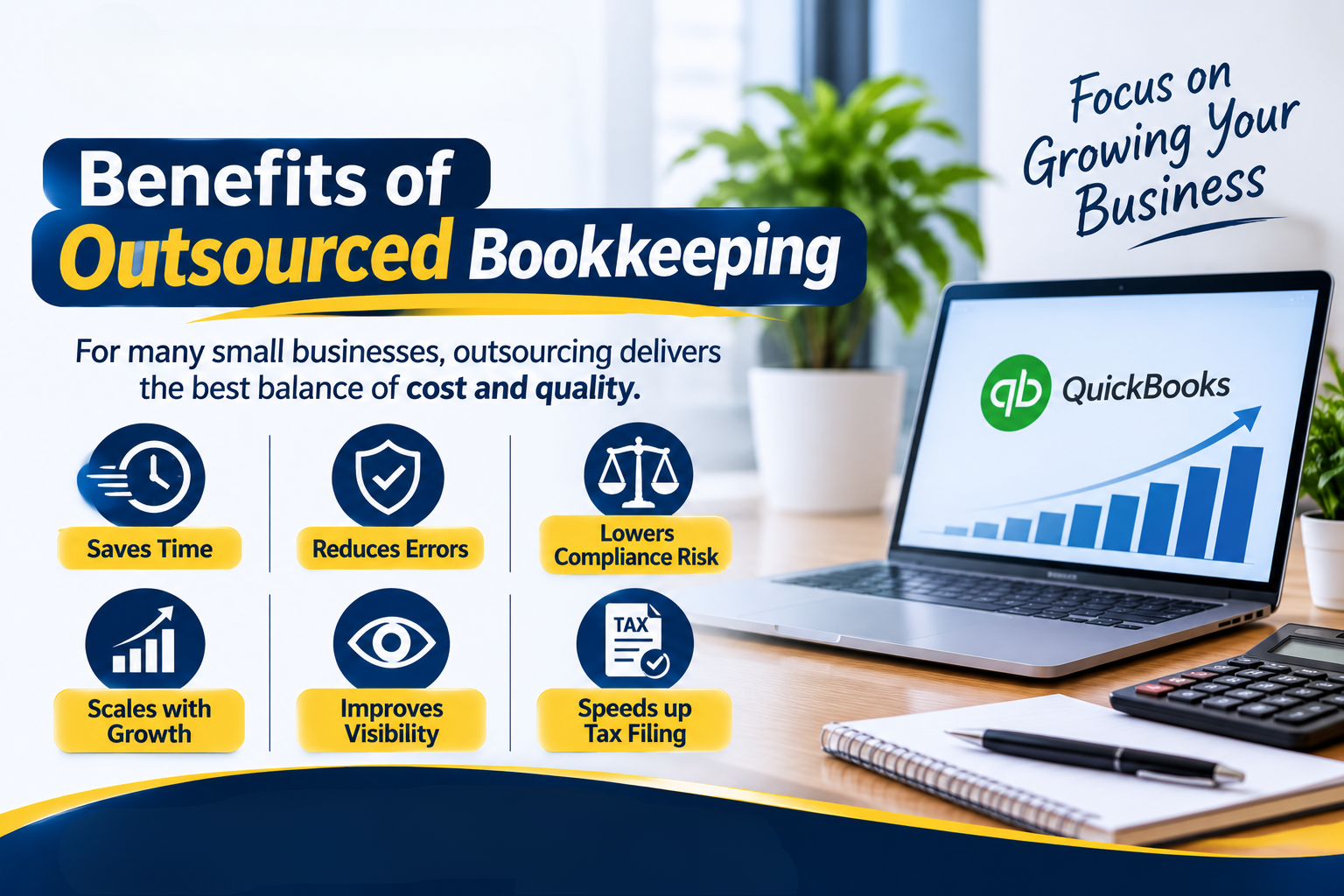
For many small businesses, outsourcing delivers the best balance of cost and quality.
- Saves time: Hours spent on data entry go back into sales, service, and strategy.
- Reduces errors: Trained professionals catch mistakes that DIY owners often miss.
- Lowers compliance risk: Consistent, accurate records protect you during tax season and audits.
- Scales with growth: You can add services as your needs expand, without hiring.
- Improves visibility: Regular reports show your real cash flow management position, so you can plan ahead.
- Speeds up tax filing: Your accountant receives organized records, which often lowers preparation time and cost.
Common Bookkeeping Mistakes to Avoid
Even careful owners fall into these traps:
- Mixing personal and business expenses: This complicates taxes and can weaken your liability protection.
- Skipping monthly reconciliation: Small errors pile up and become expensive to fix.
- Losing receipts and mileage logs: Missing documentation can cost you legitimate deductions.
- Misclassifying workers: Treating an employee as a contractor can trigger penalties.
- Ignoring unpaid invoices: Slow collections quietly drain cash flow.
- Waiting until tax season: Rushed year-end cleanup is costly and stressful.
Tips for Getting the Most From Your Bookkeeper
A great provider still needs your cooperation. Send documents on time, answer questions about unclear transactions, and keep business and personal spending separate. Review your monthly reports and ask questions, since the numbers are only useful if you understand them. Finally, schedule a quarterly check-in to talk about taxes, goals, and any changes in your business.
Frequently Asked Questions
What are bookkeeping solutions?
Bookkeeping solutions are software and services that record and organize a business’s financial transactions so the books are accurate, reconciled, and ready for tax filing.
How much do bookkeeping services cost in the USA?
Costs depend on transaction volume, number of accounts, services included, and whether past records need cleanup. Most providers give a monthly quote after reviewing your finances.
Is bookkeeping the same as accounting?
No. Bookkeeping records and organizes transactions, while accounting analyzes that data, prepares tax filings, and provides financial strategy.
Can I do my own bookkeeping?
Yes, if your business is simple and you have time to learn software like QuickBooks. As your volume grows, outsourcing usually saves time and reduces mistakes.
What is the best bookkeeping software for small businesses?
QuickBooks Online, Xero, and FreshBooks are popular choices. The best one depends on your industry, budget, and the tools you already use.
When should I hire a bookkeeper?
Consider hiring one when bookkeeping takes time away from running your business, when you feel unsure about your numbers, or when you are preparing to hire staff or seek funding.
Conclusion
The right bookkeeping solution gives you accurate books, tax confidence, and clear numbers for better decisions. Whether you choose software, a virtual bookkeeper, or a full-service firm, pick a provider that understands US requirements and fits your business size and budget.