Bookkeeping is one of those tasks that's easy to ignore until it becomes a problem: a missed tax deadline, a cash flow surprise, or a lender asking for statements you can't produce. The right bookkeeping service prevents all of that. The wrong one creates new problems while charging you for the privilege.
With AI-powered tools, remote teams, and a crowded market of providers, choosing a bookkeeper in 2026 is harder than it used to be. This guide walks you through what to look for.
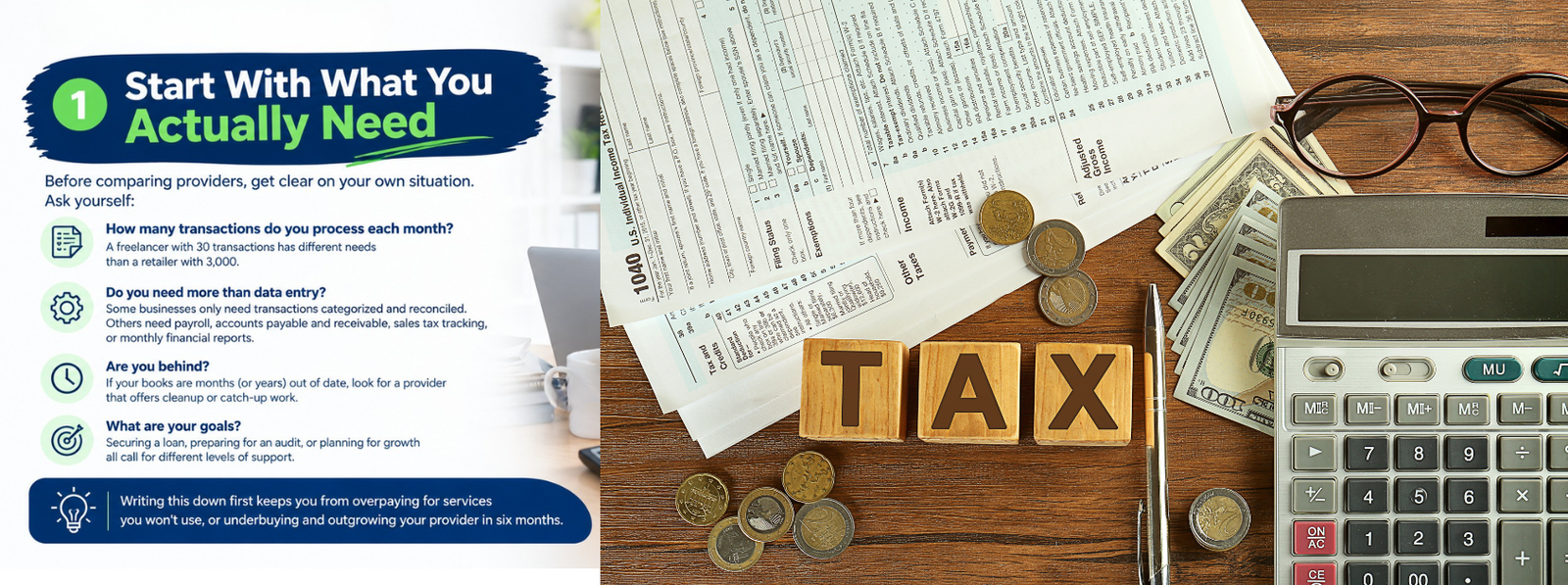
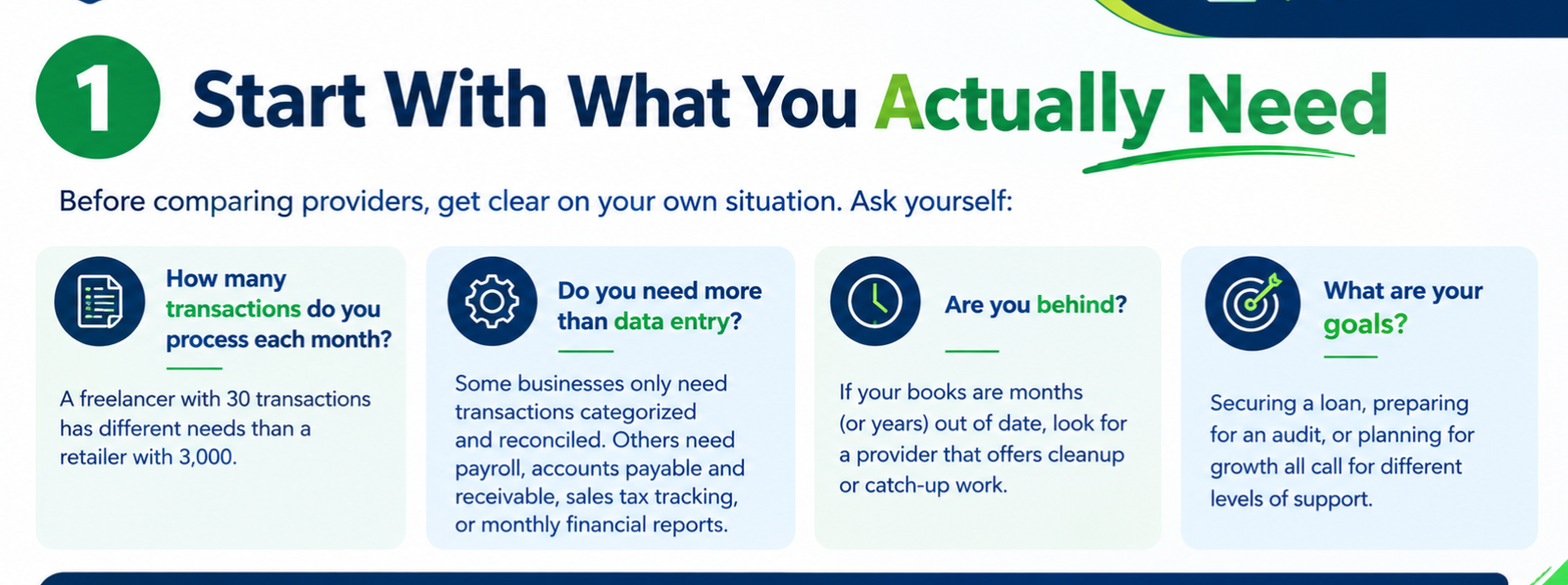
1. Start With What You Actually Need
Before comparing providers, get clear on your own situation. Ask yourself:
- How many transactions do you process each month? A freelancer with 30 transactions has different needs than a retailer with 3,000.
- Do you need more than data entry? Some businesses only need transactions categorized and reconciled. Others need payroll, accounts payable and receivable, sales tax tracking, or monthly financial reports.
- Are you behind? If your books are months (or years) out of date, look for a provider that offers cleanup or catch-up work.
- What are your goals? Securing a loan, preparing for an audit, or planning for growth all call for different levels of support.
Writing this down first keeps you from overpaying for services you won't use, or underbuying and outgrowing your provider in six months.
2. Decide Between Types of Providers
Freelance bookkeepers often offer personal attention and flexible pricing, but you depend on one person. If they're sick or overbooked, your books wait.
Bookkeeping firms provide a team, defined processes, and backup coverage. They tend to cost more but offer more consistency and scalability.
Hybrid or tech-enabled services combine software automation with human review. They're often fast and affordable, but quality depends on how much real human oversight is built in.
In-house staff give you full control but come with salary, benefits, and training costs that rarely make sense for small businesses.
For most small and mid-sized businesses, a firm or tech-enabled service with a dedicated point of contact hits the best balance.
3. Check Their Software Compatibility
Your bookkeeper should work in tools you already use, or recommend better ones and help you switch. Ask whether they support platforms like QuickBooks, Xero, FreshBooks, or Zoho Books, and whether they can integrate with your bank, payment processors, payroll system, and e-commerce platform.
Also ask who owns the data and the accounting file. You should always have direct access to your own books, and you should be able to take them with you if you leave.
4. Look at How They Use Automation and AI
In 2026, most good providers use automation for bank feeds, receipt capture, and transaction categorization. That's a good thing: it lowers costs and speeds up turnaround. But automation isn't a substitute for judgment.
Ask directly:
- Which tasks are automated, and which are reviewed by a person?
- Who catches categorization errors?
- How do you handle unusual or one-off transactions?
A provider that can clearly explain where humans step in is usually more trustworthy than one promising "fully automated" accuracy.
5. Verify Credentials and Experience
Bookkeeping isn't always regulated the way accounting is, so credentials vary. Look for relevant certifications (such as those from professional bookkeeping associations), but weigh these alongside:
- Industry experience. A bookkeeper who understands restaurants, construction, e-commerce, or professional services will know the quirks of your business.
- References and reviews. Ask for two or three client references, and read independent reviews.
- Access to tax professionals. If your bookkeeper works with CPAs or enrolled agents, year-end becomes much smoother.
6. Understand the Pricing Structure
Pricing models generally fall into three types:
- Flat monthly fee, based on transaction volume or business size. This is predictable and easy to budget.
- Hourly rate, which suits small or irregular needs but can get expensive.
- Tiered packages, which bundle services at different levels.
Whatever the model, ask what's not included. Common surprises include cleanup fees, charges for extra bank accounts, rush requests, and year-end adjustments. Get pricing in writing, and ask how and when fees can change.
7. Ask About Security and Confidentiality
Your bookkeeper will see bank details, payroll data, and customer information. Ask how they protect it:
- Do they use encryption and multi-factor authentication?
- Who on their team can access your files?
- Do they have confidentiality agreements in place?
- What is their process if there's ever a data breach?
Vague answers here are a red flag.
8. Evaluate Communication and Reporting
Great bookkeeping is only useful if you can understand and act on it. Find out:
- How often will you receive financial reports, and what's included (profit and loss, balance sheet, cash flow)?
- Will someone walk you through the numbers, or just send a PDF?
- How quickly do they respond to questions?
- Will you have a dedicated contact?
A good bookkeeper doesn't just record the past. They help you see what the numbers mean for your next decision.
9. Run a Trial or Start Small
Before committing to a long contract, ask about a trial month, a paid pilot, or a month-to-month agreement. A short trial shows you how accurate they are, how responsive they are, and whether their reports make sense to you. Be cautious of providers that push long lock-in contracts before you've seen their work.
Red Flags to Watch For
- Unwillingness to provide references
- No clear process for reviewing errors
- Pressure to sign quickly
- Vague or hidden pricing
- No access for you to your own books
- Promises of "guaranteed" tax savings
A Quick Checklist
Before you sign, make sure you can answer yes to these:
- Do they understand my industry?
- Do they work with my software, or help me move to better software?
- Is their pricing clear and in writing?
- Do I know who handles my account and how to reach them?
- Is my data protected, and do I retain ownership?
- Will I receive reports I can actually use?
- Can I start with a trial or flexible term?
Final Thoughts
The best bookkeeping service isn't necessarily the cheapest or the most high-tech. It's the one that fits your business, communicates clearly, and gives you accurate numbers you can trust when it's time to make decisions. Take the time to ask questions, compare a few providers, and start with a small commitment. A little diligence now can save you a lot of stress, and money, later.
Ready to get your books in order?
Elite Bookkeeping Solution | "Contact us for a free consultation."